The False Friends Hiding in Similar Initials
Similar initials can make unrelated organizations look connected. Compare full names, public statements, and relevant records to tell resemblance from affiliation.
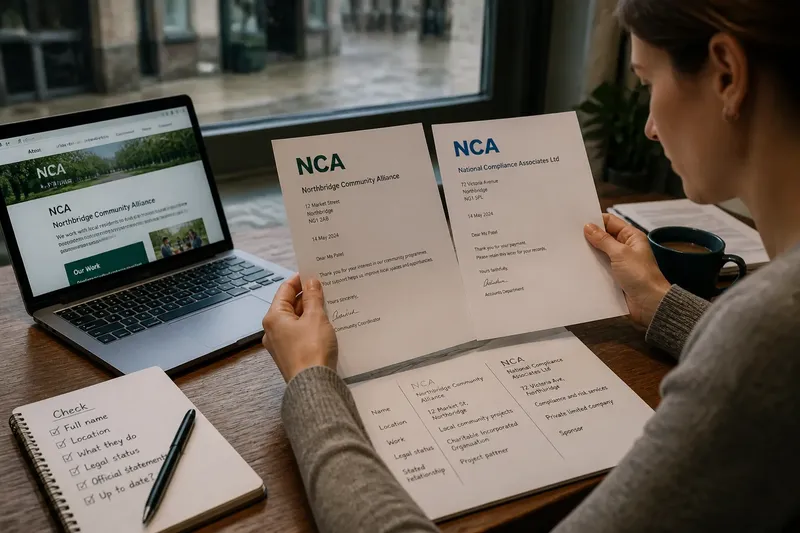
The common mistake with similar initials is treating resemblance as a relationship. A reader sees “NCA” on a letterhead and “NCA” on a website, assumes the organizations share an office or purpose, and may send a payment, inquiry, or complaint to the wrong place. Initials are a clue to investigate, not evidence of a connection.
This matters because unrelated organizations can arrive at the same initials through different full names. Separate what the letters resemble from what each organization says about itself and what the relevant records support. The right level of checking depends on the decision you need to make.
Start with the full names, not the shared letters
Initials hide information. “RHS” might stand for a regional housing service, a neighborhood historical society, or a company whose formal name has changed. Even when two groups use the same letters, their expanded names may point to different locations, fields, or legal identities.
Look for the full name where each organization presents it: a letter’s signature block, an “About” page, a formal notice, or a registration record. Compare the wording rather than trying to infer it from the initials. A shortened name may be informal, while a legal name may include words or a suffix that never appears in the logo.
Then check whether the names actually overlap. Shared initials may come from common words such as “community,” “regional,” or “services,” but matching letters alone do not establish shared management, funding, membership, or history.
Use context to narrow the possibilities
For a low-stakes question, such as whether two event listings probably refer to the same local club, compare each group’s full name, subject, location, and description of its work. If those details diverge, treat the shared initials as a coincidence unless stronger evidence appears.
Context helps sort possibilities, but it cannot confirm a relationship. Two organizations in the same city and field might collaborate, compete, or have no contact. Similar wording on a social profile may also be copied, outdated, or too vague to settle the question.
For a quick comparison, check each detail and let the mismatch guide your next action:
- If the full names differ, record the names as distinct and look for a stated former name before treating them as one organization.
- If the locations differ, check whether either organization lists another office or chapter; if not, keep the locations separate in your notes.
- If the organizations describe different work, treat the initials as a resemblance and seek direct evidence before claiming an affiliation.
- If both descriptions name the same activity, check for a direct statement from each organization; if neither provides one, describe the overlap without calling it a partnership.
- If one page is dated or appears inactive, look for a current official page or record; if you cannot confirm it is current, qualify any conclusion as unverified.
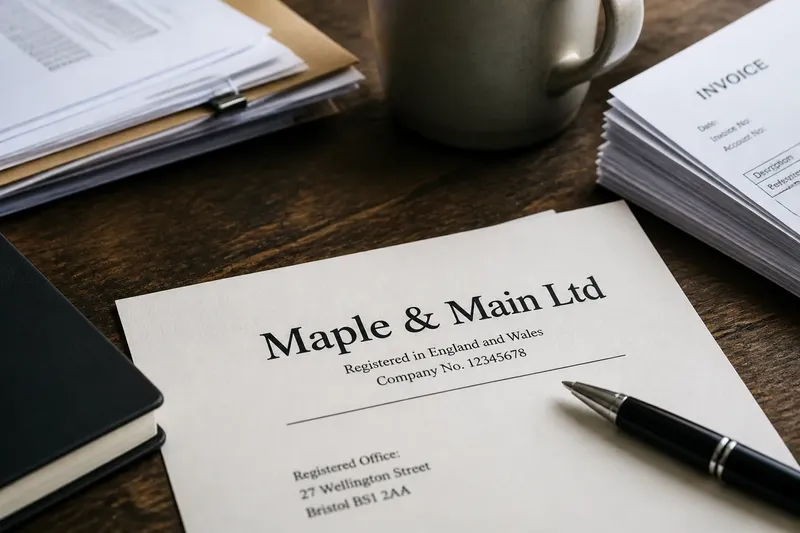
- If a formal name includes a legal suffix absent from the logo, compare the full registered names; if they do not match, do not assume the short forms identify the same entity.
Look for direct statements about a claimed relationship
This is the right next move when someone describes a group as a branch, affiliate, partner, or parent organization. Look for a direct statement on an official site or document, then check whether the other organization describes the relationship in compatible terms. A website link, shared branding, or joint announcement may add context, but a bare link does not explain the connection.
Pay attention to the exact wording. “Partner,” “member,” “sponsor,” “chapter,” and “owned by” describe different arrangements. If a page calls one group a partner, do not turn that claim into an assertion of ownership or shared administration.
Say you are cataloging two neighborhood groups that both use “NCA.” One group’s official page calls the other a project partner, while the second group’s page names the first as a sponsor. Record those stated roles separately; do not describe either group as a branch or owner unless a source directly supports that stronger claim.
Check an authoritative record when the decision matters
For a contract, donation, formal complaint, employment matter, or legal notice, check the record appropriate to the organization’s type and location. Depending on the organization, that may be a government registry, regulator, professional directory, or another official record. Compare the complete registered name and any identifying details the record provides, rather than searching initials alone.
A record may confirm that an entity exists under a name without explaining informal affiliations or current day-to-day relationships. If the point matters and the available records remain unclear, ask the organization directly or consult a qualified professional where appropriate. The right record depends on the organization and jurisdiction.
Match the claim to the evidence
Evidence should answer a specific claim. “These groups use the same initials” is observable; “one controls the other” is a much stronger claim and needs evidence that addresses control. Decide what relationship you are checking before deciding what would count.
Useful support may include an explicit statement from both organizations, a formal filing that identifies a parent or subsidiary, or a document describing shared governance. A directory may help establish names and locations, but a listing that places two groups in the same category does not show that they are connected.
Consider the source’s purpose and date. An organization’s own page can tell you how it describes itself, but it may not be an independent account of a disputed claim. A current official record may be more relevant for legal identity, while an older brochure may describe a former name or relationship.
Keep your conclusion narrower than your evidence. If a record lists the same address for two groups, say that; do not assume they share staff or ownership. If one organization publicly calls the other a partner, report that wording without adding details about how the partnership works.
Which question are you trying to answer?
Do matching initials mean two organizations are affiliated?
No. The letters show a naming resemblance, not shared ownership, membership, purpose, or history. Look for a direct statement or relevant record that supports the specific relationship being claimed.
Can a shared address prove the organizations are the same?
Not by itself. Organizations may use the same building, mailing service, or office address while remaining separate, so compare full names and other identifying details.
What if one organization uses several versions of its name?
Compare the full name on formal records with the name used on public materials, and note any stated former or trading name. If the relationship between the versions remains unclear and matters to your decision, ask the organization for confirmation.
When should I stop relying on a quick comparison?
Stop when the answer could affect money, legal rights, personal information, or a formal complaint. Use an appropriate authoritative record and seek qualified advice if the available evidence does not resolve the issue.
State only what the search supports
When you write or repeat what you learned, distinguish identity from association. “The names share initials” is different from “the organizations are affiliated,” and “the organization’s site describes a partnership” is more accurate than asserting details the site does not provide.
For similar initials, make the claim earn its way beyond the letters: compare full names for a quick distinction, seek statements from both sides for a claimed partnership, and check appropriate records when the consequences matter. If the evidence stops short of a clear answer, say so; that qualification can prevent a reader from treating resemblance as proof.