What Ltd Adds to a Name, and What It Cannot Tell You
Learn what Ltd means in a company name, how it signals a legal form, and how to distinguish that narrow clue from claims about a business.
The common mistake with Ltd in a company name is treating the ending as a compact company profile. A reader may see it and assume the organization is established, trustworthy, or still active, but the suffix identifies a legal form—not a business’s reputation or current status.
Ltd identifies a legal form, not a reputation
“Ltd” is short for “limited” and appears at the end of some companies’ registered names. Broadly, it signals a limited-company form under the rules of the relevant jurisdiction; the precise terminology and legal consequences depend on where the company is registered.
That naming signal does not tell you whether a business keeps its promises. A company with Ltd in its name could provide careful service, disappoint customers, or no longer trade. The suffix alone cannot distinguish among those possibilities.
Think of Ltd as a clue about the organization’s legal identity. It can help separate a company name from a product or project name, but it cannot replace the information needed to assess a particular business.
The suffix has a specific job on the page
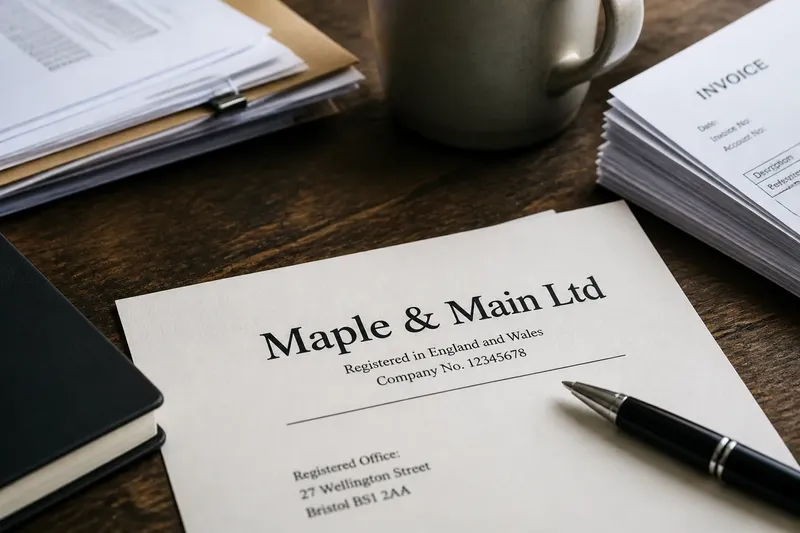
In formal contexts, the suffix may form part of the registered name rather than serve as decorative punctuation. It can appear on contracts, invoices, official correspondence, and company records. Preserving it helps identify the entity named, particularly when a public-facing name differs from the registered one.
For example, an organization might use “Maple & Main” as its public-facing name while its registered name is “Maple & Main Ltd.” The shorter version can suit a headline or conversation, but where legal identity matters, make the distinction clear and use the formal name shown on the relevant documents.
If you are copying a name from a document, keep the suffix when exact identification matters. For ordinary reference, follow the organization’s public style without implying that its brand and legal entity are necessarily the same name.
What Ltd cannot tell you about a company
The suffix does not reveal what a company sells, who runs it, how long it has existed, or whether it is financially sound. It does not establish that the company is large, local, independent, or experienced, either. Those questions require information beyond the name.
Imagine you are choosing between two fictional caterers, Cedar Table Ltd and Sunday Kitchen Ltd. Their names suggest a limited-company form, but not which serves your area, can accommodate a particular dietary need, or communicates clearly. You would need to check those details separately rather than treating either suffix as a quality mark.
Nor does a suffix confirm present status. An old brochure may still display a company name after circumstances have changed. If current activity matters to your decision, consult an appropriate current record or contact the organization.
Similar endings do not mean identical rules
You may encounter endings such as “Ltd,” “Limited,” “LLC,” or “Inc.” Each belongs to a legal naming system, and the terms are not interchangeable. A familiar-looking suffix from one place does not establish the exact rights or obligations attached to an organization elsewhere.
Even the meaning and consequences of Ltd depend on the applicable legal system. If you need to understand what a particular structure means for a contract or another consequential decision, check official information for that jurisdiction or consult a qualified professional.
For an unfamiliar ending, ask what legal form that exact suffix denotes in the place where the organization is registered. That question is more useful than assuming similar labels work alike.
Which questions does Ltd leave unanswered?
Does Ltd mean a company is trustworthy?
No. It identifies a legal form, not a promise about conduct, service, or reliability. Look for information relevant to the decision you are making rather than treating the suffix as an endorsement.
Does Ltd mean the organization is still operating?
No. A suffix in a name does not confirm current activity or status. If current information matters, check an appropriate up-to-date company record or contact the organization.
Can a trading name leave Ltd off?
A company may use a public-facing name that omits its legal suffix, so its website or storefront may show a different name from its registered one. Where exact legal identity matters, check the formal name in relevant company or transaction documents.
Is Ltd the same as LLC or Inc.?
Not necessarily. Each ending belongs to a legal naming system, and similar wording does not establish identical rules across jurisdictions. Check the specific form and location instead of substituting one suffix for another.
Use Ltd as a clue, then check the claim
When you see Ltd in a company name, read it as a narrow signal about legal form within the relevant system. Use the full registered name when precision matters, and distinguish it from a shortened brand or trading name when writing about the organization.
For a question about quality, activity, or history, seek information that addresses that question directly. Ltd can help you identify the kind of name in front of you, but it cannot tell you who is behind the organization or what it is doing now.